NORTHERN CALIFORNIA FISHING
Find the bite. Learn the setup. Get on the water.
THE NORTHERN CALIFORNIA FISHING HUB
What’s Biting Now
October 12, 2026 source review
Report and catch dates remain separate from source checks. Sources checked October 12, 2026, approximately 8:03–8:10 a.m. Pacific Daylight Time (PDT). Retrieval limitations are noted individually. “No newer report retrieved” describes this review’s findings—not proof that no other reports exist.
01 / SPECIES
What fish
Salmon · striped bass · trout · largemouth bass · catfish
02 / WATER
Where
Sacramento · Feather · American · Delta · Northern California lakes
03 / TACKLE
What to use
See the dated entries below for source-supported options and clearly labeled technique guidance.
04 / METHOD
How to fish it
Use the presentation notes below alongside the exact water’s current regulations.
Sacramento River — Chinook salmon
CURRENT CONDITIONS / THIRD-PARTY DISPLAY
Fish: Chinook salmon
Water: Sacramento River
Semper Fishing displayed approximately 65°F and 7,550 cfs, with flow marked as falling. Its page showed the timestamp “10/12/2026, 2:15:00 PM” exactly as displayed. The source does not identify the timezone, and that displayed time was later than the Pacific review time. It should not be interpreted as a 2:15 p.m. Pacific observation or independently validated gauge reading. No timezone is inferred or converted; the reading’s local observation time and age cannot be established from the display alone. The reading was not independently validated against the gauge.
The site’s calculated Chinook indicator displayed “STAGING” at 57% confidence, but it also showed zero recent crowd reports. This is a calculated conditions indicator—not evidence that salmon were caught on October 12.
The newest additional river report retrieved remains The Fly Shop’s October 6 Lower Sacramento update. It noted clear water, approximately 6,000 cfs in the upper section covered by that report, and salmon visible on redds. This is an observation report from a different reach, not a Freeport catch-rate report. Individual observation dates are unspecified.
What to use:
Bite Chasers technique recommendation: where legal, start with a casting spinner or another presentation suited to the specific reach and current. No October 12 catch report was found that supports a new lure or bait recommendation. See Fall Salmon Rig — Entry 01.
How to fish it:
Bite Chasers technique recommendation: work holding lanes and current seams with a controlled presentation. Keep the lure under tension and adjust depth without dragging spawning areas. Treat the condition displays as planning information, not proof of an active bite.
Source / freshness: The Fly Shop, supporting river report dated October 6, 2026; individual observations undated.
Semper Fishing, displayed timestamp “10/12/2026, 2:15:00 PM”; timezone unspecified, with no inference or conversion applied. Conditions display and supporting source checked October 12, 2026, Pacific Daylight Time (PDT).
Feather River — salmon
RECENT GUIDE/ANGLER REPORT + CURRENT INDICATOR
Fish: Chinook salmon
Water: Feather River
The newest retrieved catch-related post remains the Fish Sniffer report dated September 29, attributed to Robert Weese, describing limits on the Feather and reporting that the Sacramento River was also producing. The source does not provide the exact catch dates, reach, tackle or effort details, so it should not be presented as an October 12 catch report.
FishingProReport updated its Feather River indicator on October 12. It describes weather, moon and generalized water-related factors, but its catch-reporting feature is still listed as coming soon. Therefore, it does not verify a current salmon catch or bite rate.
What to use:
No newer source-supported tackle detail was retrieved. Bite Chasers technique recommendation: select a legal presentation appropriate to the exact reach, depth and current only after confirming reach-specific rules.
How to fish it:
Bite Chasers technique recommendation: concentrate on defined travel lanes and current breaks without treating the daily indicator as catch confirmation. Avoid disturbing visible spawning fish or redds.
Source / freshness: Fish Sniffer, catch-related post dated September 29, 2026; individual catches undated.
FishingProReport — Feather near Gridley, indicator updated October 12, 2026. Sources checked October 12, 2026, Pacific Daylight Time (PDT). No newer supported Feather River catch information was found.
California Delta — striped bass
SEASONAL GUIDANCE — NO NEW VERIFIED CATCH REPORT
Fish: Striped bass
Water: California Delta
No newer dated Delta striped-bass catch report was successfully retrieved during this review. This is not proof that no fish were caught; it means no sufficiently dated and supported new report was available from the sources checked.
CDFW states that fall movement toward the Delta may begin as early as October, often first becoming noticeable around Suisun Bay. This is seasonal guidance—not an October 12 catch report. CDFW also identifies threadfin shad, sardines, anchovies and worms as common Delta baits, with plugs, jigs and spoons among the presentations used.
What to use:
Source-supported seasonal approaches: shad, sardines, anchovies or worms for bait fishing; plugs, jigs or spoons for active searching. These are general CDFW-supported approaches, not tackle tied to a verified October 12 catch.
How to fish it:
Bite Chasers technique recommendation: use moving water, channel edges and bait activity to choose where to begin. Cover water with artificials or keep bait near likely travel lanes, adjusting for tide and current.
Source / freshness: CDFW — Fishing for Striped Bass, seasonal guidance; no October 12 catch claim. Source checked October 12, 2026, Pacific Daylight Time (PDT).
No newer supported Delta striped-bass catch report was retrieved. The previously reviewed Fish Sniffer — Rio Vista/Delta Trollers Battle Stripers account was published September 27, 2026, with trip date unspecified; previously inspected October 8. Fresh retrieval unsuccessful October 12, 2026 PDT. This retrieval limitation does not establish absence of other reports.
California Delta — Chinook salmon
RECENT GUIDE REPORT — OCTOBER 5 HOOKUP, NOT TODAY’S CATCH
Fish: Chinook salmon
Water: Rio Vista / lower Sacramento–Delta area
The newest dated report retrieved remains Doug McArthur’s October 5 guide report documenting a 24.8-pound king salmon hookup during a half-day river trip. The same report stated water was just under 69°F. It does not explicitly confirm that the fish was landed or identify the exact river reach. Expected improvement as water cools is the guide’s forecast, not an established current catch rate.
Additional reports on the same source documented a 24-pound fish on October 4, attributed to Ken Payne, and a 13.35-pound king caught with a Scorpion salmon spinner on October 1. No newer dated Chinook catch report appeared on the page during the October 12 review.
What to use:
Source-reported lure: the October 1 report specifically supports a salmon spinner. Spinner brand references belong to the source and do not represent a Bite Chasers endorsement. Neither the October 5 hookup nor the October 4 catch report supplies lure or rig details.
How to fish it:
Source-reported method: the source’s September 25 report described upstream trolling with salmon spinners. Treat that as a documented guide presentation, not a guarantee that the same pattern remains productive today. No presentation is specified for the October 5 hookup or October 4 catch; do not infer how those fish were hooked.
Source / freshness: Rio Vista reports, including the October 5 hookup, October 4 catch, October 1 spinner report and September 25 upstream-trolling report.
Newest retrieved hookup report dated October 5, 2026; source checked October 12, 2026, Pacific Daylight Time (PDT). No newer supported Delta Chinook catch was found.
Northern California lakes — Folsom Lake
RECENT REPORTS + CURRENT FORECAST
Fish: Spotted bass and trout
Water: Folsom Lake
Western Outdoor News updated its Northern California report on October 9. It described solid numbers of spotted bass around ledges, bluff walls, rockpiles and island tops, with fish feeding on crawdads or pond smelt. It also reported that trout trolling had slowed and that warmer weather was pushing trout deeper. Individual catch dates and effort details were not supplied.
A Fish Sniffer post displayed “Folsom Lake 6 Oct 2026” and described shoreline catches submitted by Jake Pellegrini, who primarily uses Megabass Vision 110 and Lucky Craft Pointer 128-style jerkbaits. The wording refers to multiple catches made during the year, so October 6 should be treated as the post date—not necessarily the date of every pictured catch. The submission does not specify species. Manufacturer references are source attribution, not Bite Chasers endorsements.
Lake Insights rated the October 12 fishing outlook 3/5, “Good,” with moderate wind and a low rain chance. It listed a best activity window of 6:50–7:50 p.m. local time and a lake level of approximately 404.54 feet, falling, with the level marked one day old. The exact lake-level observation timestamp is not supplied in that summary. The source expressly says its outlook helps compare conditions and does not predict whether fish will bite. This is a forecast, not catch evidence.
What to use:
Bite Chasers technique recommendation: based on the reported forage, bass anglers can start with crawdad- or pond-smelt-imitating presentations around structure. The October 9 report does not identify a productive lure or rig. Source-reported lures: the angler submission supports jerkbait use from shore, without establishing today’s bite. For trout, be prepared to search deeper rather than assuming a shallow trolling bite.
How to fish it:
Bite Chasers technique recommendation: work ledges, rockpiles, bluff walls and island tops methodically for bass. From shore, use jerkbaits where depth and clear casting lanes permit. Boat anglers targeting trout should vary depth and use electronics where available. The reports do not specify retrieve speed, precise fishing depth or rigging. The forecast window is planning information—not a verified bite period.
Source / freshness: Western Outdoor News — North Freshwater Report, updated October 9, 2026; individual catches undated. Fish Sniffer — Folsom submission, posted October 6, 2026; individual catches undated.
Lake Insights — Folsom outlook, forecast October 12, 2026; lake-level display labeled one day old. Sources checked October 12, 2026, Pacific Daylight Time (PDT).
Legal requirements are separate from technique. Fishing techniques above are recommendations or source-attributed observations, not legal instructions. Seasons, open reaches, closures, hook rules, limits and access can vary by exact water and date. Anglers should verify the specific location through official CDFW regulations before fishing. This update does not announce an open salmon season, legal reach, limit or tackle rule. CDFW notes that its electronic regulation booklets may be revised during the year. Official reference checked October 12, 2026 PDT.
Rod’s Rig of the Week — Fall Salmon
RIG LIBRARY ENTRY 01 · FALL SALMON CASTING-SPINNER RIG
A straightforward casting setup for inland Chinook salmon fishing where the exact water, date and tackle are authorized. Built for bank anglers and anglers casting from a boat. This is an educational technique feature, not a current fishing report or an announcement of an open season.
The complete setup
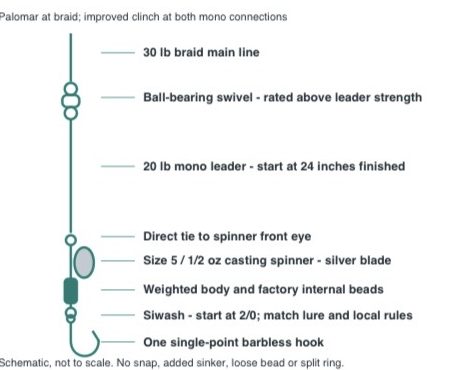
Bite Chasers recommended starting specifications: 30 lb braid to a compact, high-quality two-eye ball-bearing swivel rated above the 20 lb leader strength (50 lb is one example). Start with a 24-inch finished mono leader tied directly to a size 5, 1/2 oz casting spinner. Use one barbless Siwash on its rear loop, starting at 2/0 and matching hook fit to the spinner and water-specific regulations.
01 / Components and recommended sizes
Rod: 8 ft 6 in medium-heavy spinning rod; rated for 1/2 oz lures
Reel: 4000-size spinning reel; about 150 yd of 30 lb braid
Main line: 30 lb braid; mono backing as reel instructions require
Swivel: Compact, high-quality ball-bearing swivel with two solid eyes; rated above leader strength (e.g., 50 lb)
Leader: 20 lb abrasion-resistant mono; start at 24 in eye-to-eye after tying; adjust for conditions
Spinner: Size 5 / 1/2 oz weighted inline casting spinner; silver blade
Hook: One barbless, single-point open-eye Siwash; start at 2/0; match spinner fit and water-specific rules
Added tackle: No sinker, snap, loose bead, split ring, bait or scent
Buying the spinner: The Mepps plain Aglia size 5 is a reference for the 1/2 oz size class [2]. Buy a suitable single-hook version, or convert a treble-hook version as described below. Size numbers differ among brands; use the stated weight and casting design, not a size number alone. This diagram shows the converted direct-hook build.
Hook fit: 2/0 is the recommended starting size, not a standardized measurement. Actual hook fit must match the spinner and any water-specific regulations. Select a strong hook that swings freely without touching the blade. Prefer a factory-barbless hook; if flattening a barb, close it completely and inspect it. Measure the actual hook gap and check applicable rules before use.
Tools: Ruler, braid scissors, needle-nose pliers, side cutters and eye protection. A landing net and hook-removal pliers belong in the fishing kit. Set drag initially near 5 lb using a scale; reduce it if knots or hook strength require. Never lock the drag.
02 / Assemble it at home
1. Prepare the spinner. Use a 1/2 oz silver-blade weighted casting spinner. If it has a treble, cut only the old hook eye with side cutters; shield flying pieces and leave the spinner wire loop intact. Do not cut the spinner shaft.
2. Install the single hook. Select a Siwash that fits the spinner and water-specific regulations, starting at 2/0. Slip its open eye directly onto the rear wire loop. Pinch the eye fully closed with pliers. It must pivot freely, have no escape gap and clear the blade. If the lure cannot accept this safely, use a compatible lure; do not improvise an extra ring in this build.
3. Attach the main line. Tie 30 lb braid to one solid eye of the compact, high-quality ball-bearing swivel rated above leader strength (50 lb is an example) with a Palomar: double about 6 inches of line, pass the loop through the eye, tie a loose overhand with the doubled line, pass the swivel through the loop, wet and draw down evenly. Leave about 1/4 inch of tag. Keep the doubled strands parallel.
4. Cut the leader. For a 24-inch finished starting leader, cut roughly 34 inches of 20 lb mono to allow for knots and trimming. Adjust the cut length if choosing a different finished length. Tie one end to the free swivel eye using a five-turn improved clinch: pass through the eye, wrap around the standing line five times, pass the tag through the small loop beside the eye and then the larger loop just formed. Wet, tighten smoothly and trim to about 1/8 inch.
5. Tie directly to the lure. Use the same improved clinch at the spinner front eye. Start with about 24 inches between the swivel eye and spinner eye after both knots are tightened. Measure the finished leader, then adjust it for conditions and casting comfort; 24 inches is not the only correct length. No snap or additional swivel at the lure.
6. Inspect and test. Pull firmly on each connection while keeping the hook covered and away from hands. Check for slipping, frayed braid, whitened mono or an open hook eye. Replace damaged parts. Test beside shore: the blade should rotate while the body tracks without tumbling.
7. Final trip check. Confirm the exact water, boundaries, date and gear rules with CDFW before taking the rig fishing. The recommended hook and lure are not a universal guarantee of compliance.
Why this simple arrangement?
The swivel helps manage line twist; mono gives an abrasion buffer and some stretch. The spinner body supplies the casting weight. The 24-inch leader is a Bite Chasers recommended starting specification for manageable casting, not a legal minimum. Shorten it if casting space is tight; consider a longer leader in clear water if you can cast and land fish comfortably. Recheck any applicable rigging rules when adjusting it. Keep the swivel outside the rod tip when casting. Manufacturer guidance supports an inline swivel, direct-tied leader and Siwash conversion, but uses different line/leader recommendations [3].
03 / Fish the spinner
Basic presentation
Start with a short test cast across and slightly upstream. Close the bail by hand, gather slack and allow a brief controlled sink. Begin a smooth retrieve; a small lift can start the blade. Retrieve only fast enough to keep it rotating. Maintain contact as the lure swings across and downstream, adjusting rod angle and speed so it travels above bottom rather than dragging.
Begin shallow, then extend the sink count one second at a time to explore deeper water. A count is a repeatable comparison, not a depth measurement: current, line angle and lure shape change sink rate. Shorten the count immediately if you hit bottom. Fan casts across the run and repeat productive angles. Do not park the spinner on bottom, sweep through visible fish, or use repeated sharp ripping motions.
On a strike, reel until the line is tight and make a firm, controlled sweep. Keep steady pressure with the barbless hook and let the drag work. Avoid lifting a fish with the rod or leader; use a suitable net. If hooked fish must be released, minimize handling and keep them in the water while unhooking when practical.
From the bank
Choose a stable position with a clear casting arc and a reachable landing spot. Start with close casts before reaching farther seams. Cast across/slightly upstream and follow the lure with the rod as it swings. Keep braid clear of rocks and brush. Move or change angle rather than pulling across another angler’s line. Avoid unsafe wading, undercut banks and obvious spawning beds.
From a boat – casting, not trolling
Use the identical rig. Position outside the casting lane and work a controlled drift or hold safely with the bow into the current. Account for boat movement: drifting toward the lure creates slack; moving away speeds its presentation. Cast across/slightly upstream, gather slack and retrieve with the same steady blade action. Coordinate casts, keep line away from propellers, and have a net ready.
Wear a life jacket. Do not anchor in hazardous fast water or improvise anchoring from the stern. This 1/2 oz casting rig is not a deep-water trolling or back-trolling setup. If it cannot hold a useful depth safely, change location or choose a separately developed method rather than adding weight to this build.
04 / Adjustments, regulations and permanent entry
Adjust presentation before changing the rig
Faster current: Shorten the cast, seek a softer seam and manage slack promptly. Cast slightly farther upstream only when you can retain contact. Do not automatically retrieve faster; current already drives the blade. If the lure rides too high or loses control, move to gentler water.
Slow water: Keep retrieving enough to start and sustain blade rotation. Use brief sink counts to reach depth; a stalled blade needs a gentle lift or a little more speed.
Shallow / snaggy water: Start the retrieve sooner, shorten casts and raise the rod modestly. Fish above rocks and timber. Repeated snags mean change the angle or location. Do not grab braid or pull with a deeply bent rod; keep people clear of a lure that may spring free.
Deeper water: Increase the controlled sink count gradually, lower the rod angle and keep contact. If the 1/2 oz spinner cannot reach the lane without snagging or excessive slack, select another spot. Heavier lures or added sinkers require a separate rig and renewed legal review.
Clear water: Try longer controlled casts and a subtle silver finish. A copper or matte blade is an optional replacement if glare appears excessive; fish response varies.
Stained water / low light: An optional gold or contrasting painted blade in the same 1/2 oz casting class may improve visibility. These are experiments, not guaranteed color rules. In muddy water, poor visibility can make this method ineffective.
Official regulations – separate from technique
No current season, closure, bag limit, possession limit or water-specific hook rule is asserted in this draft. Before a trip, check the precise river reach or Delta boundary, date, salmon authorization, gear restrictions, license requirements and emergency or low-flow changes through CDFW [1]. Do not assume catch-and-release permits targeting salmon during a closure. The barbless single-hook build is a technique choice here, not a statement of statewide law.
Source checked October 3, 2026: CDFW warns that regulation booklets may be revised during the year. A future location-specific legal box must include the official source, exact reach, effective dates and verification date before it is added to the site.
Sources and editorial distinction
[1] CDFW regulations hub (official legal source): wildlife.ca.gov/Regulations/Fishing/Inland
[2] Mepps catalog, plain Aglia size/weight reference: Mepps catalog – Aglia
[3] Yakima Bait, casting-spinner technique and hook conversion: Casting Rooster Tail Spinners For Trout (2018; technique, not California legal authority). These are Bite Chasers recommended starting specifications and technique adaptations; manufacturer sources do not validate this complete build.
Rig Library
ENTRY 01 · PERMANENT GUIDE
Fall Salmon
Fall Salmon — Casting-Spinner Rig is the first permanent entry. Its diagram, components, assembly steps and bank/boat guidance remain available after the weekly feature changes. Read Entry 01 →
NEXT IN THE LIBRARY
Delta striped bass — sliding bait rig
Next in the permanent library after Fall Salmon. Components, knots, bait presentation and bank/boat notes are in preparation.
Fish by Location
PERMANENT LOCATION GUIDES
Learn the water, choose a presentation and plan your trip. These guides describe general species and seasonal patterns. Fishing approaches are Bite Chasers technique recommendations, not current catch reports or legal requirements. For dated information, visit What’s Biting Now.
Northern California rivers
Sacramento River · Feather River · American River
California Delta
Channels, sloughs and tidal water
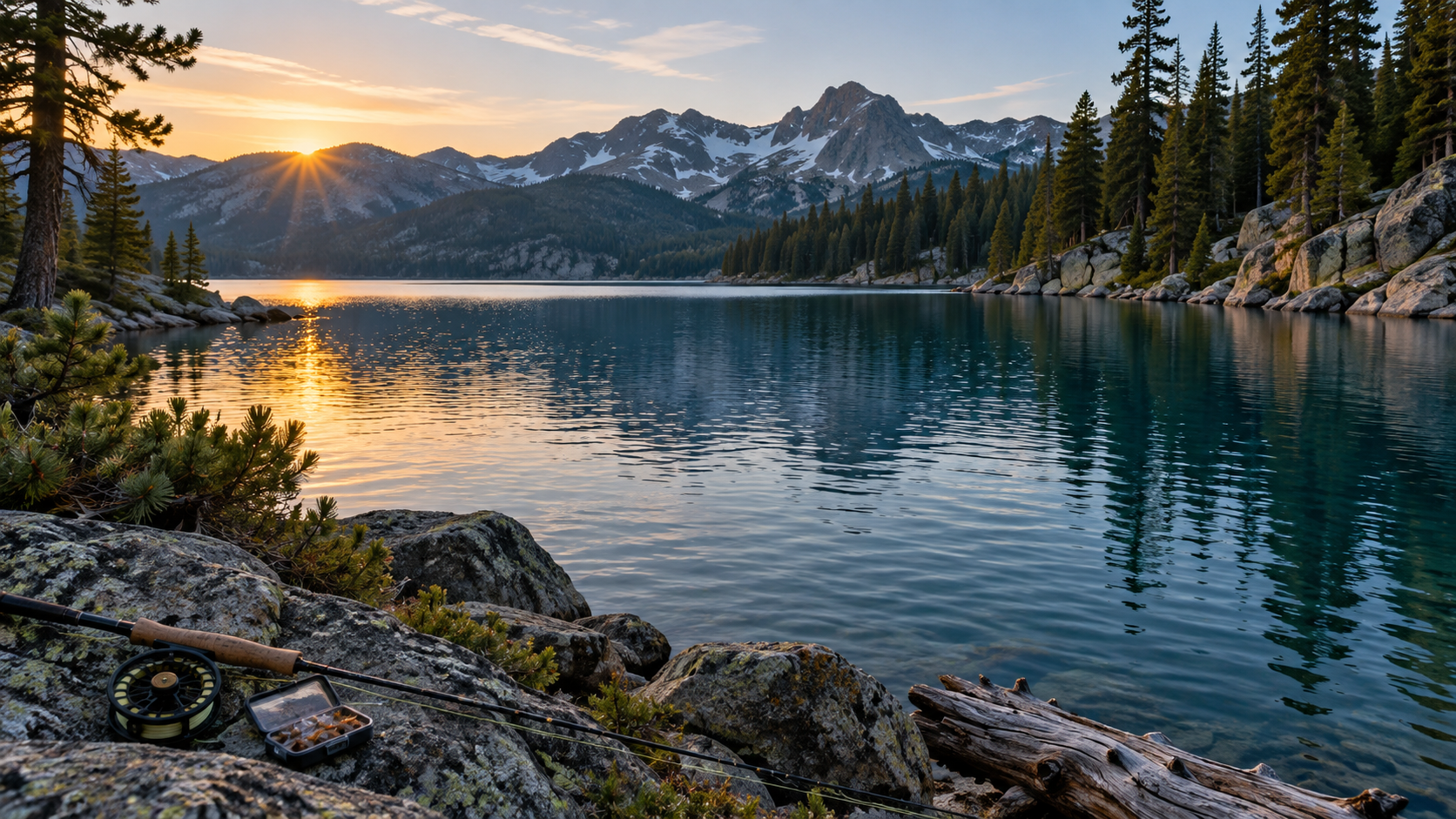
Northern California lakes
Lake guides and seasonal tactics
Northern California Rivers
Sacramento River
Main species:
Chinook salmon, striped bass, steelhead/rainbow trout, American shad and catfish. Species opportunities differ substantially between upper-river, valley and tidal reaches.
Bank or boat:
From lawful bank access, concentrate on reachable current seams and a safe landing position. Boats can cover more water, but require careful attention to current, submerged obstacles and changing flows.
Seasonal patterns:
Spring striper movement and spring/early-summer shad migration are useful planning patterns. Fall-run Chinook migrate upstream toward spawning areas, with timing varying by river and year. These patterns do not establish an open fishing season.
What to use:
Where authorized, consider casting spinners for salmon; bait, plugs, jigs or spoons for striped bass; small jigs or flies for shad.
How to fish it:
Match weight and retrieve speed to the current. Work a controlled presentation through a seam rather than repeatedly dragging bottom. Change depth or casting angle before adding excessive weight.
Access planning:
Confirm lawful entry, shoreline footing and launch information with the relevant land manager. Plan for cold water, current and floating debris.
Related reports and rigs:
What’s Biting Now: Sacramento River — Chinook salmon, October 3, 2026 update. Rig Library: Fall Salmon Casting-Spinner Rig — Entry 01, where appropriate and authorized.
Feather River
Main species:
Chinook salmon and steelhead are central to this guide. Striped bass also occur in the river; select guidance for the particular reach rather than treating the whole Feather alike.
Bank or boat:
Bank anglers can work reachable seams and runs from safe, lawful positions. Boats offer different casting angles and water coverage where navigation and access permit.
Seasonal patterns:
Salmon and steelhead return on different schedules. CDFW describes autumn salmon spawning activity and winter steelhead spawning activity at the hatchery; these are biological patterns, not fishing-season dates.
What to use:
Where authorized, casting spinners for salmon; suitable flies, small jigs or permitted drift/float presentations for steelhead.
How to fish it:
Keep contact through the drift or swing. Adjust depth gradually, avoid dragging through spawning beds and move to softer water if the presentation becomes difficult to control.
Access planning:
Verify the exact reach, hatchery-area boundaries and lawful access before choosing a spot. Do not assume a visible trail or nearby hatchery provides fishing permission.
Related reports and rigs:
What’s Biting Now: Feather River — salmon, October 3, 2026 update. Rig Library: Fall Salmon Casting-Spinner Rig — Entry 01, where appropriate and authorized.
American River — Lower River
Main species:
Steelhead, Chinook salmon, striped bass and American shad. This first guide covers the lower American; the upper forks require separate guidance.
Bank or boat:
Compare bank casting through accessible runs with suitable boat or paddle presentations. Choose a position that allows safe line control and landing without crowding other river users.
Seasonal patterns:
Shad migration generally belongs to spring and early summer. Salmon and steelhead movement adds other seasonal opportunities, with timing varying by species and conditions. Biological presence does not establish fishing permission.
What to use:
Where authorized, small jigs or flies for shad; suitable steelhead flies or permitted drift/float setups; casting spinners for salmon; baitfish-style lures for striped bass.
How to fish it:
Work seams and transitions between riffles and pools. Maintain a controlled drift or retrieve, vary depth deliberately and avoid disturbing spawning fish.
Access planning:
Consult Sacramento County Regional Parks information for the intended area. Confirm entry, applicable boating restrictions and exact fishing boundaries before traveling.
Related reports and rigs:
What’s Biting Now: No current American River catch report is included. Rig Library: Fall Salmon Casting-Spinner Rig — Entry 01, where appropriate and authorized.
California Delta
Regional guide
Main species:
Striped bass, largemouth bass and catfish, plus migrating Chinook salmon in appropriate channels. Select a target species before choosing a setup.
Bank or boat:
Bank fishing can suit bait presentations and casting where lawful shoreline access exists. Boats can explore channels, sloughs and depth changes; wind, wakes and tidal current affect positioning.
Seasonal patterns:
CDFW describes spring striper movement inland and a fall return that can begin in October. Salmon also migrate upstream seasonally. Neither pattern confirms today’s bite or a legal fishing season.
What to use:
For striped bass, shad, sardines, anchovies or worms, plus plugs, jigs and spoons. For largemouth bass, consider soft plastics and other cover-oriented lures; for catfish, suitable permitted bait. Salmon presentations require a separate species and regulation check.
How to fish it:
Adjust bait weight as tidal current changes. Work lures through likely travel lanes or along cover, keeping control near snags. Casting and trolling are separate methods with different positioning needs.
Access planning:
Verify lawful shoreline entry or launch arrangements with the operator or land manager. Do not assume levees, roads or marina property provide public access.
Related reports and rigs:
What’s Biting Now: California Delta — striped bass seasonal guidance and Chinook salmon recent-report note, October 3, 2026 update; the Chinook guide report describes a September 25 trip. Rig Library: Fall Salmon Casting-Spinner Rig — Entry 01 covers casting, where appropriate and authorized. Delta striped bass — sliding bait rig is the next planned entry.
California Delta — Regional guide
Main species:
Striped bass, largemouth bass and catfish, plus migrating Chinook salmon in appropriate channels. Select a target species before choosing a setup.
Bank or boat:
Bank fishing can suit bait presentations and casting where lawful shoreline access exists. Boats can explore channels, sloughs and depth changes; wind, wakes and tidal current affect positioning.
Seasonal patterns:
CDFW describes spring striper movement inland and a fall return that can begin in October. Salmon also migrate upstream seasonally. Neither pattern confirms today’s bite or a legal fishing season.
What to use:
For striped bass, shad, sardines, anchovies or worms, plus plugs, jigs and spoons. For largemouth bass, consider soft plastics and other cover-oriented lures; for catfish, suitable permitted bait. Salmon presentations require a separate species and regulation check.
How to fish it:
Adjust bait weight as tidal current changes. Work lures through likely travel lanes or along cover, keeping control near snags. Casting and trolling are separate methods with different positioning needs.
Access planning:
Verify lawful shoreline entry or launch arrangements with the operator or land manager. Do not assume levees, roads or marina property provide public access.
Related reports and rigs:
What’s Biting Now: California Delta — striped bass seasonal guidance and Chinook salmon recent-report note, October 3, 2026 update; the Chinook guide report describes a September 25 trip. Rig Library: Fall Salmon Casting-Spinner Rig — Entry 01 covers casting, where appropriate and authorized. Delta striped bass — sliding bait rig is the next planned entry.
Northern California Lakes
This expandable section will hold individual lake guides. Folsom Lake is the first lake-specific example, with additional lakes to follow.
Regional overview
Main species:
Bass, trout and catfish are starting categories; the actual species list belongs to each lake profile.
Bank or boat:
Bank anglers work reachable shoreline structure and depth changes. Boats can explore offshore structure or troll where permitted.
Seasonal patterns:
Temperature, elevation, water level and species influence where to begin. Treat seasonal guidance as a planning framework; do not assume all Northern California lakes follow the same calendar.
What to use:
Consider small spoons or spinners for trout, soft plastics or jigs for bass, and permitted bait for catfish.
How to fish it:
Start with the intended species and a manageable depth. Change one variable at a time—depth, speed or presentation—and keep track of the response.
Access planning:
Check the individual lake’s official information for entry, launch arrangements, inspection requirements and notices before traveling.
Related reports and rigs:
What’s Biting Now: Lake-specific dated updates when available, beginning with Folsom’s October 3, 2026 forecast. Rig Library: No lake-specific setup is included yet.
Northern California Lakes — Regional overview
Main species:
Bass, trout and catfish are starting categories; the actual species list belongs to each lake profile.
Bank or boat:
Bank anglers work reachable shoreline structure and depth changes. Boats can explore offshore structure or troll where permitted.
Seasonal patterns:
Temperature, elevation, water level and species influence where to begin. Treat seasonal guidance as a planning framework; do not assume all Northern California lakes follow the same calendar.
What to use:
Consider small spoons or spinners for trout, soft plastics or jigs for bass, and permitted bait for catfish.
How to fish it:
Start with the intended species and a manageable depth. Change one variable at a time—depth, speed or presentation—and keep track of the response.
Access planning:
Check the individual lake’s official information for entry, launch arrangements, inspection requirements and notices before traveling.
Related reports and rigs:
What’s Biting Now: Lake-specific dated updates when available, beginning with Folsom’s October 3, 2026 forecast. Rig Library: No lake-specific setup is included yet.
Folsom Lake — First lake-specific example
Main species:
State Parks identifies trout, catfish, largemouth bass and smallmouth bass among Folsom’s fishing species.
Bank or boat:
Bank anglers can work reachable shoreline structure and depth changes from lawful access. Boats can explore additional depths or troll where permitted. Choose an approach suited to the target species and conditions.
Seasonal patterns:
Use temperature, water level and the target species to guide presentation and depth. These are general planning considerations, not a current conditions report or a statement that fishing is open.
What to use:
Bite Chasers recommended starting approaches include small spoons or spinners for trout, soft plastics or jigs for bass, and permitted bait for catfish.
How to fish it:
Begin at a manageable depth and maintain a controlled presentation. Adjust depth, retrieve speed or lure choice one variable at a time. Adapt the regional lake approaches to the shoreline and species you are targeting.
Access planning:
Consult the official Folsom Lake information for entry, launch arrangements, inspection requirements and notices before traveling. This guide does not assert current launch or access status.
Related reports and rigs:
What’s Biting Now: Folsom Lake — October 3, 2026 weather/solunar outlook; a forecast, not a verified catch report. Rig Library: No Folsom-specific setup is included yet.
Before fishing: Verify the exact water, reach, date, species and tackle with official CDFW regulations. Confirm access separately with the responsible land manager. These guides do not announce current openings, closures, limits or access availability.
Permanent-reference sources checked: October 3, 2026. This date is not verification that fishing or access is currently authorized.
Catch of the Month
YOUR CATCH. YOUR STORY.
Share a catch
Photo, species and general waterbody are enough. Exact spots are never required. Submission details are coming; a selected monthly catch may receive a free Bite Chasers shirt or hat.
More from Bite Chasers
Articles
Fishing Reports & Planning
How to Read a Fishing Report Without Getting Misled
Separate actual catches, current conditions, seasonal guidance and forecasts.
Rigs & Techniques
Bank Fishing the Sacramento River: Practical Setup and Safety Tips
Choose a practical bank setup, secure footing and a safe landing plan.
Salmon Fishing
How to Fish a Casting Spinner for Salmon
Control casting angle, sink time and retrieve speed with the approved Fall Salmon rig.
READ
Fishing guides & articles
Browse the Articles archive for practical Northern California fishing guidance.
LOCAL
Tackle partners
Tackle shop information is in preparation. No retailer relationships or affiliate links have been confirmed.
WEAR
Bite Chasers Gear
Premium shirts, long sleeves, hoodies and embroidered hats are planned.
BITE CHASERS · Northern California waters, practical setups and the stories behind the catch.

